
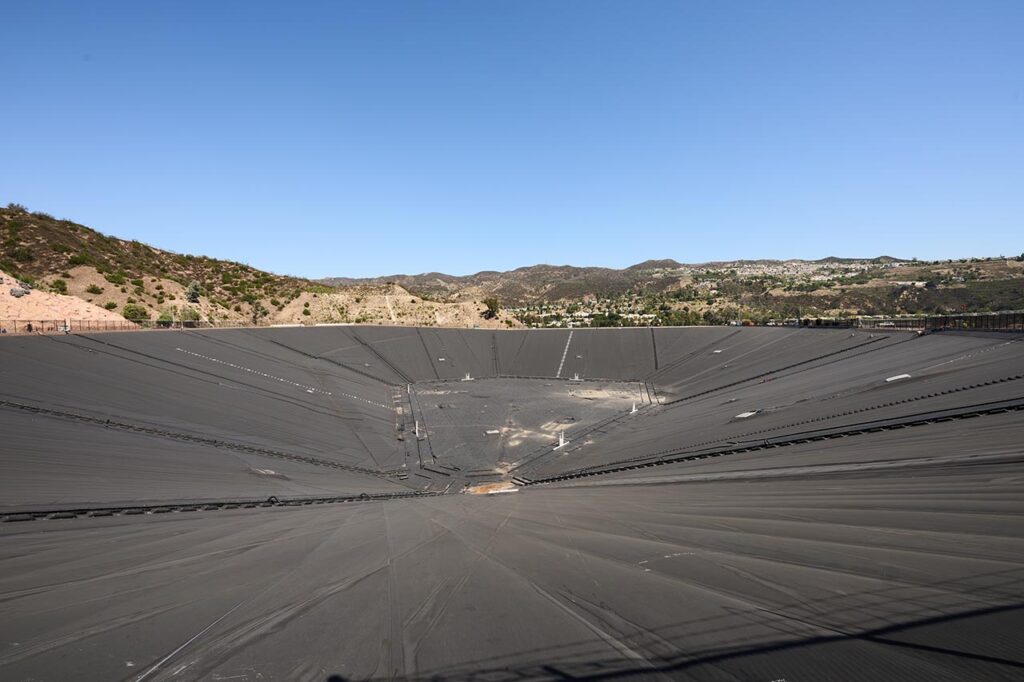
LOS ANGELES (October 2, 2026) – The Los Angeles Department of Water and Power (LADWP) began refilling the Santa Ynez Drinking Water Reservoir yesterday. At the current fill rate of approximately 1.5 feet to 2 feet per day, the reservoir is anticipated to be back in service by the end of the year.
The refilling process follows the completion of a new floating cover designed to protect drinking water quality and ensure compliance with state and federal drinking water regulations. The design and installation of the new reinforced liner and floating cover system – both required to safeguard potable storage under the EPA’s Long‑Term 2 Enhanced Surface Water Treatment Rule – began earlier this year and was fully installed in September.
Throughout the floating cover replacement project and current refilling process, LADWP continues to provide uninterrupted drinking water service to Pacific Palisades customers through the Upper Stone Canyon Reservoir and the Westgate Trunk Line.
In the event of an emergency, LADWP is prepared to maintain a level of water service through added contingencies including:
- Deploying six miles of hose with booster pumps to move water from Corbin Tank to Temescal Tank if there is a service disruption;
- Having emergency pipe and fittings readily available to be installed on Sunset Boulevard in the event of a service disruption to Westgate Trunk Line;
- Positioning emergency generators in the Pacific Palisades to keep critical water equipment running during a power outage;
- Increasing brush clearing around LADWP facilities to reduce fire risk and maintain operations during construction;
- Stationing water tankers in the community and at Stone Canyon Reservoir for additional water supply during construction; and,
- Ensuring aerial‑firefighting water sources remain available, including the Santa Ynez heli‑hydrant, Palisades Reservoir cistern, and additional supplies at the Encino and Stone Canyon open-air reservoirs.
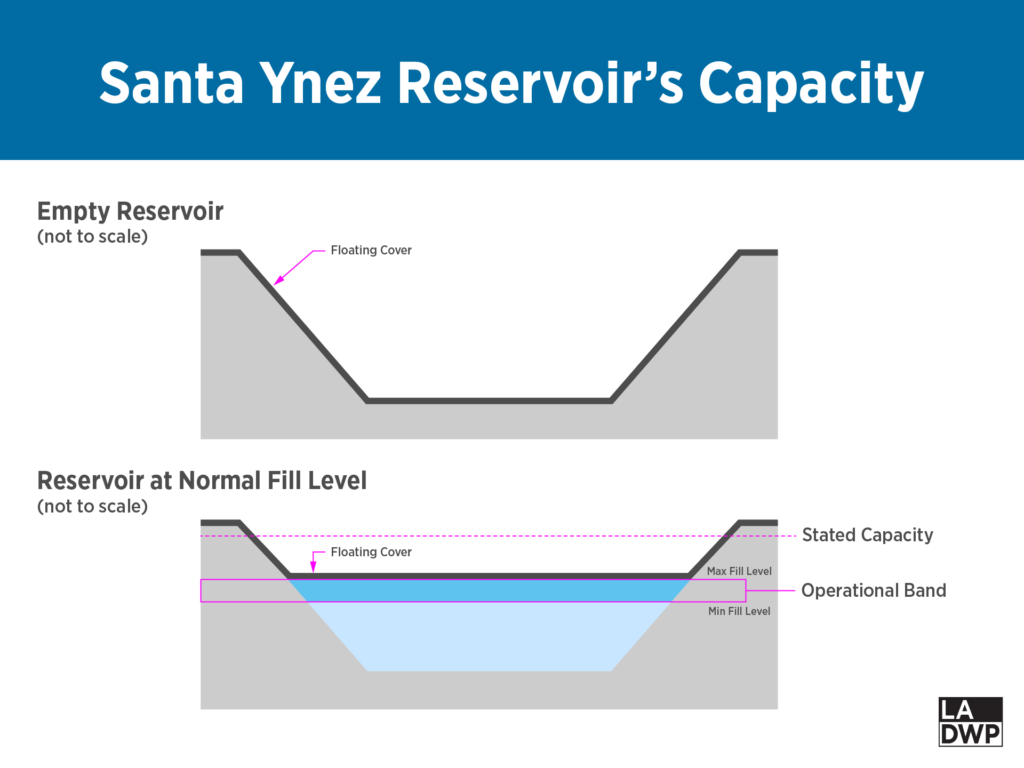
While the Santa Ynez Reservoir has a total capacity of 117 million gallons, the fill level of the reservoir varies, and the reservoir operates within a limited range -there’s a maximum level it should not exceed and a minimum level it should stay above to remain functional. This range, known as the operational band, ensures the reservoir maintains water quality and system pressure. As a result, the capacity of 117 million gallons does not reflect how much water is in the reservoir, or actually available for use, which is only a fraction of the reservoir’s capacity.
For more information about the Santa Ynez Reservoir, please visit: LADWP.com/SantaYnezReservoirCover
###
